

What to Do If Your Child Chips or Knocks Out a Tooth

Dr.-Christopher-Pae-avatar
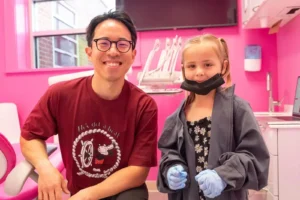
Dr. Christopher Pae, founder and owner of Paper Planes Pediatric Dentistry
Thin decorative divider with small icons, creating visual separation and playful design element across website section.

Quick answer: If a permanent tooth is knocked out, pick it up by the crown, rinse it briefly in milk if it’s dirty, and put it back in the socket right away. If you can’t, keep it in milk and get to a dentist immediately, because the root cells that help it reattach start dying within about 30 minutes once the tooth dries out. A knocked-out baby tooth should not be put back in. For a chipped tooth, save the broken piece in a little milk or water, rinse your child’s mouth with warm water, use a cold compress, and call your pediatric dentist the same day. Go right away if there’s pink or red in the middle of the break, or the tooth is loose or out of place.

It happens in a second. Your four-year-old trips on the front steps, or your nine-year-old catches a lacrosse stick to the mouth, and suddenly there’s crying, blood, and a piece of tooth on the ground. The first reaction is panic. The second is a question: is that a baby tooth or an adult tooth, and does it change what I do? It changes a lot. Here’s how to handle the first few minutes and what to watch for afterward. It’s worth reading before you ever need it.

How Common Are Chipped and Knocked-Out Teeth in Children?

More common than most parents think. According to the International Association of Dental Traumatology (IADT), about one in four school-age children has some kind of dental injury. Baby teeth take the most hits between ages 2 and 6, when kids run faster than their balance can keep up, and in permanent teeth, chips are the most common injury. Whether it’s a playground slide in Garden City or a soccer field in Mineola, the story is usually the same: a fall, a collision, something hard. You’re not doing anything wrong as a parent when it happens. What matters is knowing what to do next.

Is It a Baby Tooth or a Permanent Tooth? How to Tell Quickly

  • Under age 6: it’s almost certainly a baby tooth. Permanent front teeth usually arrive somewhere around 6 to 8.
  • Ages 6 to 8: it could be either. Permanent front teeth are noticeably bigger, and new ones often have a slightly wavy biting edge.
  • Age 8 and up: the front teeth are usually permanent.

If you really can’t tell, don’t force it back in. Put it in a cup of milk and call your dentist right away. That protects a permanent tooth without the risks of reinserting a baby one.

What to Do If a Permanent Tooth Is Knocked Out

This is the one true race against the clock in pediatric dentistry. A permanent tooth that’s put back quickly has a real chance of reattaching and lasting for decades.

1. Pick the tooth up by the crown. That’s the white part you normally see. Don’t touch the root, since the living cells on it are what help it reattach.

2. Rinse it only if it’s dirty. A few seconds in milk, saline, or your child’s saliva. Don’t scrub it, don’t use soap, and don’t wipe it on a shirt.

3. Put it back in the socket. Make sure it’s facing the right way, press it gently into place, and have your child bite on a clean cloth to hold it. It feels strange, but it’s the best thing you can do for the tooth.

4. If it won’t go back in, keep it wet. Milk is the best option most families have. A tooth-saving kit with Hank’s Balanced Salt Solution works too, or have your child spit into a small cup and put the tooth in that. Plain water isn’t great, but it beats letting the tooth dry out.

5. Get to a dentist right away. Don’t wait until morning. After about 30 minutes out of the mouth and dry, most of the root cells that help a tooth reattach are no longer alive, according to the IADT.

Don’t have a younger child carry the tooth in their mouth on the way. It’s too easy to swallow or inhale.

Why a Knocked-Out Baby Tooth Shouldn’t Be Put Back In

This surprises a lot of parents, but IADT guidelines are clear: a knocked-out baby tooth should not be replanted. The permanent tooth is developing right next to its root, and pushing the baby tooth back in can damage it. The guidelines’ biggest concern, though, is that a replanted baby tooth could come loose again and be inhaled.

Your child still needs to be seen, so bring the tooth if you found it. A dentist will check that the whole tooth came out and the neighboring teeth are okay. And a baby tooth that looks knocked out is sometimes actually pushed up into the gum, out of sight. That needs a dentist’s eyes.

What to Do If Your Child Chips or Breaks a Tooth

  • Rinse your child’s mouth gently with warm water.
  • Find the broken piece if you can and keep it in a little milk or water. A dentist can often bond it right back on.
  • Hold a cold compress on the outside of the lip or cheek for swelling.
  • For pain, give a children’s pain reliever at the label dose or the dose your pediatrician recommends. Don’t put anything directly on the gum.
  • Call your pediatric dentist, even if it doesn’t hurt. A chip that looks small can still reach the inner layers of the tooth, and bacteria can follow.

How to Tell If a Chipped Tooth Is Serious

  • Small chip, white edge, no pain: only the enamel is involved. Get it seen within a few days. It may just need a sharp edge smoothed.
  • Yellowish layer showing, or sensitive to cold and air: the break has reached dentin, the layer under the enamel. Get it seen the same day or the next.
  • A pink or red spot in the middle, or the tooth is bleeding: the nerve (pulp) is exposed. Call right away. The sooner it’s treated, the better the chance of keeping the nerve healthy.
  • The tooth is loose, pushed in, or out of line: that isn’t just a chip anymore. Call right away, even if the tooth looks intact.

What the Dentist May Do for a Chipped or Knocked-Out Tooth

It depends on the tooth and the injury, but under current IADT guidelines, small chips are usually smoothed or rebuilt with tooth-colored bonding, and a saved fragment can often be bonded back on. When the nerve is exposed, the dentist may cover or treat it so the rest of the tooth stays alive. A permanent tooth that’s been put back is usually held with a thin, flexible splint for about two weeks, and your dentist may prescribe an antibiotic and ask about tetanus shots. Baby tooth injuries are handled more conservatively, often just smoothing and watching.

At home, expect soft foods for a week or two, gentle brushing with a soft toothbrush, and no contact sports until your dentist clears it. Injured teeth can change weeks or months later, so plan on a few follow-up visits and X-rays over the next year.

Warning Signs to Watch for in the Weeks After a Tooth Injury

  • The tooth turning gray or dark. It’s common after an injury, and in baby teeth it often fades over weeks or months. It doesn’t automatically mean the tooth has died, but your dentist should know.
  • Swelling in the gum, or a small pimple-like bump near the tooth, which can signal infection.
  • The tooth getting looser instead of firmer, or new pain when biting.

After a baby tooth injury, the permanent tooth coming in behind it can occasionally show white or brown spots or arrive late. Mention the old injury at checkups. It’s one more way baby teeth matter long after they’re gone.

When a Tooth Injury Needs the Emergency Room First

Go to the ER first if your child may have a broken jaw, hit their head hard, has bleeding that won’t stop with steady pressure, or has any trouble breathing or swallowing. Our parent’s guide to dental emergencies walks through that decision in more detail. For everything else, call the dentist.

How to Help Prevent Chipped and Knocked-Out Teeth

A properly fitted mouthguard is the biggest one for kids who play sports, and it matters in more sports than parents expect. Our post on sports mouthguards covers which ones. At home, stair gates for toddlers and helmets on bikes and scooters go a long way.

Frequently Asked Questions

How long do I have to save a knocked-out permanent tooth?

Minutes, not hours. Ideally it goes back in the socket right away. If it can’t, keep it in milk and get to a dentist immediately. After about 30 minutes out of the mouth and dry, most of the root cells that help it reattach are no longer viable.

Can a knocked-out baby tooth be put back in?

No. IADT guidelines advise against it, because it can damage the permanent tooth developing underneath and could be inhaled if it comes loose again. Your child should still see a dentist.

Can a chipped piece of tooth be bonded back on?

Often, yes. Keep the piece in a little milk or water and bring it with you, and a dentist can frequently bond it back onto the tooth.

My child’s tooth turned gray after a fall. Is it dead?

Not necessarily. Discoloration is common after an injury, and in baby teeth it often fades. Let your dentist know so they can check for signs of infection, which is what actually decides whether treatment is needed.

Does a chipped baby tooth need to be fixed?

Sometimes. A tiny chip may just need smoothing, while a deeper break may need a repair to protect the nerve. It’s worth having a dentist look, since baby teeth hold space for the permanent teeth coming in.

Can an injury to a baby tooth affect the adult tooth?

It can. The permanent tooth develops right next to the baby tooth’s root, so a hard hit can occasionally cause spots, changes in shape, or a delay in the adult tooth coming in.

Dealing with a tooth injury, or want to be ready for one? Contact Paper Planes Pediatric Dentistry in Garden City, NY right away at 516-894-0718 or book online here to get your family set up with a dental home before you need one. We welcome families from Garden City, Mineola, and across Long Island.


Ready to book your child’s first visit? Our team is standing by to help you schedule a same-week appointment and verify your insurance ahead of time.

About The Doctor

Dr.-Christopher-Pae

Christopher Pae, DDS

Dr. Christopher Pae is a board-certified pediatric dentist (ABPD) and member of the American Academy of Pediatric Dentistry with almost a decade of clinical experience. A graduate of Fordham University and Stony Brook School of Dental Medicine, he founded Paper Planes Pediatric Dentistry in Garden City, NY, where he combines modern technology with a connection-first approach to make every child's dental visit warm, encouraging, and fun.

Book Your Child's First Visit

Same-week appointments available. No obligation.

More from the Flight Log

What to Do If Your Child Chips or Knocks Out a Tooth

Quick answer: If a permanent tooth is knocked out, pick it up by the crown, rinse it briefly in milk if it’s dirty, and put it back in the socket right away. If you can’t, keep it in milk and get to a dentist immediately, because the root cells that help it reattach start dying within about 30 minutes once the tooth dries out. A knocked-out baby tooth should not be put back in. For a chipped tooth, save the broken piece in a little milk or water, rinse your child’s mouth with warm water, use a cold compress, and call your pediatric dentist the same day. Go right away if there’s pink or red in the middle of the break, or the tooth is loose or out of place.

It happens in a second. Your four-year-old trips on the front steps, or your nine-year-old catches a lacrosse stick to the mouth, and suddenly there’s crying, blood, and a piece of tooth on the ground. The first reaction is panic. The second is a question: is that a baby tooth or an adult tooth, and does it change what I do? It changes a lot. Here’s how to handle the first few minutes and what to watch for afterward. It’s worth reading before you ever need it.

How Common Are Chipped and Knocked-Out Teeth in Children?

More common than most parents think. According to the International Association of Dental Traumatology (IADT), about one in four school-age children has some kind of dental injury. Baby teeth take the most hits between ages 2 and 6, when kids run faster than their balance can keep up, and in permanent teeth, chips are the most common injury. Whether it’s a playground slide in Garden City or a soccer field in Mineola, the story is usually the same: a fall, a collision, something hard. You’re not doing anything wrong as a parent when it happens. What matters is knowing what to do next.

Is It a Baby Tooth or a Permanent Tooth? How to Tell Quickly

  • Under age 6: it’s almost certainly a baby tooth. Permanent front teeth usually arrive somewhere around 6 to 8.
  • Ages 6 to 8: it could be either. Permanent front teeth are noticeably bigger, and new ones often have a slightly wavy biting edge.
  • Age 8 and up: the front teeth are usually permanent.

If you really can’t tell, don’t force it back in. Put it in a cup of milk and call your dentist right away. That protects a permanent tooth without the risks of reinserting a baby one.

What to Do If a Permanent Tooth Is Knocked Out

This is the one true race against the clock in pediatric dentistry. A permanent tooth that’s put back quickly has a real chance of reattaching and lasting for decades.

1. Pick the tooth up by the crown. That’s the white part you normally see. Don’t touch the root, since the living cells on it are what help it reattach.

2. Rinse it only if it’s dirty. A few seconds in milk, saline, or your child’s saliva. Don’t scrub it, don’t use soap, and don’t wipe it on a shirt.

3. Put it back in the socket. Make sure it’s facing the right way, press it gently into place, and have your child bite on a clean cloth to hold it. It feels strange, but it’s the best thing you can do for the tooth.

4. If it won’t go back in, keep it wet. Milk is the best option most families have. A tooth-saving kit with Hank’s Balanced Salt Solution works too, or have your child spit into a small cup and put the tooth in that. Plain water isn’t great, but it beats letting the tooth dry out.

5. Get to a dentist right away. Don’t wait until morning. After about 30 minutes out of the mouth and dry, most of the root cells that help a tooth reattach are no longer alive, according to the IADT.

Don’t have a younger child carry the tooth in their mouth on the way. It’s too easy to swallow or inhale.

Why a Knocked-Out Baby Tooth Shouldn’t Be Put Back In

This surprises a lot of parents, but IADT guidelines are clear: a knocked-out baby tooth should not be replanted. The permanent tooth is developing right next to its root, and pushing the baby tooth back in can damage it. The guidelines’ biggest concern, though, is that a replanted baby tooth could come loose again and be inhaled.

Your child still needs to be seen, so bring the tooth if you found it. A dentist will check that the whole tooth came out and the neighboring teeth are okay. And a baby tooth that looks knocked out is sometimes actually pushed up into the gum, out of sight. That needs a dentist’s eyes.

What to Do If Your Child Chips or Breaks a Tooth

  • Rinse your child’s mouth gently with warm water.
  • Find the broken piece if you can and keep it in a little milk or water. A dentist can often bond it right back on.
  • Hold a cold compress on the outside of the lip or cheek for swelling.
  • For pain, give a children’s pain reliever at the label dose or the dose your pediatrician recommends. Don’t put anything directly on the gum.
  • Call your pediatric dentist, even if it doesn’t hurt. A chip that looks small can still reach the inner layers of the tooth, and bacteria can follow.

How to Tell If a Chipped Tooth Is Serious

  • Small chip, white edge, no pain: only the enamel is involved. Get it seen within a few days. It may just need a sharp edge smoothed.
  • Yellowish layer showing, or sensitive to cold and air: the break has reached dentin, the layer under the enamel. Get it seen the same day or the next.
  • A pink or red spot in the middle, or the tooth is bleeding: the nerve (pulp) is exposed. Call right away. The sooner it’s treated, the better the chance of keeping the nerve healthy.
  • The tooth is loose, pushed in, or out of line: that isn’t just a chip anymore. Call right away, even if the tooth looks intact.

What the Dentist May Do for a Chipped or Knocked-Out Tooth

It depends on the tooth and the injury, but under current IADT guidelines, small chips are usually smoothed or rebuilt with tooth-colored bonding, and a saved fragment can often be bonded back on. When the nerve is exposed, the dentist may cover or treat it so the rest of the tooth stays alive. A permanent tooth that’s been put back is usually held with a thin, flexible splint for about two weeks, and your dentist may prescribe an antibiotic and ask about tetanus shots. Baby tooth injuries are handled more conservatively, often just smoothing and watching.

At home, expect soft foods for a week or two, gentle brushing with a soft toothbrush, and no contact sports until your dentist clears it. Injured teeth can change weeks or months later, so plan on a few follow-up visits and X-rays over the next year.

Warning Signs to Watch for in the Weeks After a Tooth Injury

  • The tooth turning gray or dark. It’s common after an injury, and in baby teeth it often fades over weeks or months. It doesn’t automatically mean the tooth has died, but your dentist should know.
  • Swelling in the gum, or a small pimple-like bump near the tooth, which can signal infection.
  • The tooth getting looser instead of firmer, or new pain when biting.

After a baby tooth injury, the permanent tooth coming in behind it can occasionally show white or brown spots or arrive late. Mention the old injury at checkups. It’s one more way baby teeth matter long after they’re gone.

When a Tooth Injury Needs the Emergency Room First

Go to the ER first if your child may have a broken jaw, hit their head hard, has bleeding that won’t stop with steady pressure, or has any trouble breathing or swallowing. Our parent’s guide to dental emergencies walks through that decision in more detail. For everything else, call the dentist.

How to Help Prevent Chipped and Knocked-Out Teeth

A properly fitted mouthguard is the biggest one for kids who play sports, and it matters in more sports than parents expect. Our post on sports mouthguards covers which ones. At home, stair gates for toddlers and helmets on bikes and scooters go a long way.

Frequently Asked Questions

How long do I have to save a knocked-out permanent tooth?

Minutes, not hours. Ideally it goes back in the socket right away. If it can’t, keep it in milk and get to a dentist immediately. After about 30 minutes out of the mouth and dry, most of the root cells that help it reattach are no longer viable.

Can a knocked-out baby tooth be put back in?

No. IADT guidelines advise against it, because it can damage the permanent tooth developing underneath and could be inhaled if it comes loose again. Your child should still see a dentist.

Can a chipped piece of tooth be bonded back on?

Often, yes. Keep the piece in a little milk or water and bring it with you, and a dentist can frequently bond it back onto the tooth.

My child’s tooth turned gray after a fall. Is it dead?

Not necessarily. Discoloration is common after an injury, and in baby teeth it often fades. Let your dentist know so they can check for signs of infection, which is what actually decides whether treatment is needed.

Does a chipped baby tooth need to be fixed?

Sometimes. A tiny chip may just need smoothing, while a deeper break may need a repair to protect the nerve. It’s worth having a dentist look, since baby teeth hold space for the permanent teeth coming in.

Can an injury to a baby tooth affect the adult tooth?

It can. The permanent tooth develops right next to the baby tooth’s root, so a hard hit can occasionally cause spots, changes in shape, or a delay in the adult tooth coming in.

Dealing with a tooth injury, or want to be ready for one? Contact Paper Planes Pediatric Dentistry in Garden City, NY right away at 516-894-0718 or book online here to get your family set up with a dental home before you need one. We welcome families from Garden City, Mineola, and across Long Island.

Previous Post

Ready to Help Your Child’s Smile Take Flight?

Nothing beats a personalized care plan designed just for your little one’s unique smile. Whether it’s time for a routine cleaning or you just want a welcoming, stress-free space to ask a few questions, our team right here in Garden City is ready to make their next dental visit an absolute breeze.

Where healthy smiles take flight.

Contact Info

Sunday - Friday: 10 AM - 6 PM

Saturday: 9 AM – 5 PM

Paper Planes Pediatric Dentistry © 2026. All rights reserved. | Developed by WeCapture Dental. | Privacy Policy – Terms & Conditions – Accessibility Statement

Privacy Policy – Terms & Conditions
– Accessibility Statement | Paper Planes Pediatric Dentistry © 2026. All rights reserved. | Developed by WeCapture Dental.