
Quick answer: It’s best to bring your child in for their first dental visit by their first birthday, or within six months of their first tooth coming in, whichever happens first. That’s the standard set by the American Academy of Pediatric Dentistry (AAPD), and it’s earlier than most parents expect.
“My daughter is only 11 months old. Isn’t she too young to go see the dentist?” This is one of the most common things we hear from parents, and it’s a completely understandable assumption. Most parents figure there “isn’t much to clean” yet, or that everything looks fine, so why rush it? But the AAPD’s guidance is clear: a child’s first dental visit should happen before their first birthday or within six months of that first tooth erupting. Here’s why going earlier than you’d think actually makes a difference.
At Paper Planes Pediatric Dentistry, we treat the first visit as much as a parent education session as it is a dental checkup. It’s a chance to walk through what’s coming next and answer the questions parents usually don’t know to ask yet, including:
If you’re heading to your first pediatric dental visit in the Garden City or Mineola area, it’s worth asking your dentist to walk through these topics with you so you know what to expect.
It’s natural to think of dental visits as something you schedule after a problem shows up: a toothache, a dental infection, or noticeable discoloration. Pediatric dentists take a different approach on purpose. Catching small issues early, or preventing them altogether, is far easier on both the child and the parent than treating a problem that’s already progressed.
Children’s teeth are especially vulnerable here. Primary tooth enamel is thinner than adult enamel, so cavities can develop and spread faster once a tooth is exposed to bacteria, plaque, and sugars. Left unaddressed, decay can grow large enough to cause pain, infection, and even disrupt the development of the permanent teeth underneath. Regular checkups starting early, roughly every six months, are what let a dentist catch these issues while they’re still small and simple to manage.
One of the biggest risks in this early window is early childhood caries (ECC), often called baby bottle tooth decay. The AAPD defines it as any decayed, missing, or filled tooth surface in a child under six, and it’s frequently caused by prolonged exposure to milk, formula, or juice, especially from bottles used at bedtime or throughout the day.
Left untreated, ECC doesn’t just affect the teeth involved. It raises the risk of new cavities in both primary and permanent teeth, and in more severe cases can lead to pain, infection, and even emergency dental visits. The encouraging part is that it’s highly preventable with a few habit changes, like avoiding putting a child to bed with a bottle of anything other than water, and starting checkups early enough to catch warning signs before they progress.
Dental anxiety often takes root earlier than parents expect, and one of the best ways to prevent it is by establishing what pediatric dentists call a dental home: one consistent, familiar place your child associates with routine care rather than something scary or painful.
Early, positive exposure to the dentist does more than protect against cavities. Left unaddressed, dental fear can follow a child into adulthood, leading to skipped checkups and delayed treatment until something actually hurts. It tends to become a cycle: the more a person avoids the dentist, the more the anxiety around it grows.
In more severe cases, that anxiety can make even routine exams, cleanings, and basic treatment difficult without sedation, which isn’t just inconvenient. It gets in the way of the consistent care that prevents bigger problems down the road.
Children who start seeing the dentist early tend to have the opposite experience. Regular visits become routine rather than a source of stress, and kids who are comfortable at the dentist typically have fewer oral health issues overall. At Paper Planes Pediatric Dentistry, we treat these visits as more than a chance to fix problems. They’re an opportunity to build trust and comfort over time, which tends to make kids more curious and engaged about their own health, a habit that often carries into other parts of their lives.
A little preparation goes a long way toward making that first appointment low-stress for both of you. A few things that help:
Your child should have their first dental visit by their first birthday, or within six months of their first tooth coming in, whichever comes first.
Even with just a few teeth, a pediatric dentist can check for early signs of decay, review feeding habits that affect tooth health, and confirm that growth and development are on track.
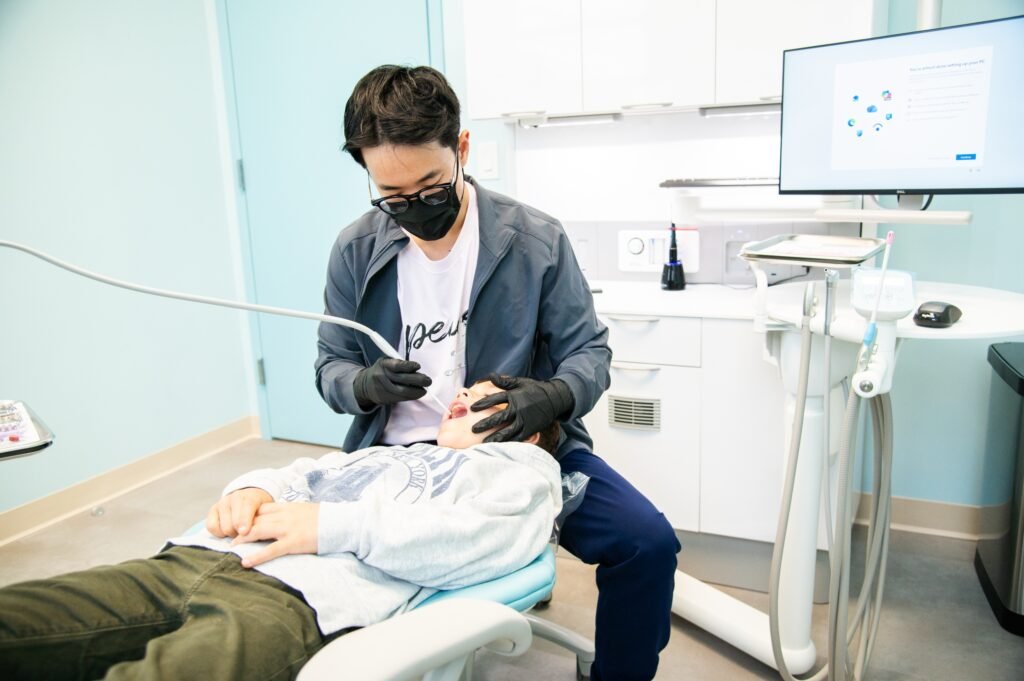
It typically includes a gentle exam of the teeth, gums, jaws, and overall growth, plus parent guidance on teething, habits like thumb sucking or pacifier use, and how much fluoride toothpaste to use.
Yes. Prolonged exposure to formula, milk, or juice, especially from bedtime bottles, is a leading cause of early childhood caries (ECC), also known as baby bottle tooth decay.
Yes. Introducing children to the dentist before they have any negative associations helps normalize routine visits, which lowers the risk of dental anxiety later on and supports better oral health habits long-term.
That’s completely normal, especially at a first visit, and it’s not a sign anything is wrong. Pediatric dentists and their teams are trained specifically to work with young children, keep exams brief, and help kids grow more comfortable with each visit.
Ready to schedule your child’s first visit? Contact Paper Planes Pediatric Dentistry in Garden City, NY to book an appointment: call (516) 894-0718 or book online here. We welcome families from Garden City, Mineola, and across Long Island.


Paper Planes Pediatric Dentistry © 2026. All rights reserved. | Developed by WeCapture Dental. | Privacy Policy – Terms & Conditions – Accessibility Statement
Privacy Policy – Terms & Conditions
– Accessibility Statement | Paper Planes Pediatric Dentistry © 2026. All rights reserved. | Developed by WeCapture Dental.