
Quick answer: The best school lunches for teeth pair protein and calcium, like cheese, yogurt, eggs, or lean meat, with crunchy fruits and vegetables, and skip sticky, sugary extras like fruit snacks, dried fruit, and juice pouches that cling to teeth for hours. Water is the best drink to pack. A lunch built around a few whole foods does more for your child’s teeth than any single snack marketed as healthy.
Parents ask us some version of the same question every August: what should actually go in the lunchbox? Lunch is the one meal your child eats entirely away from a toothbrush, so what’s in it matters more than most parents realize. Here’s a practical guide to packing a lunch that supports strong teeth without turning into a fight over what actually gets eaten.
It isn’t just what your child eats at lunch, it’s how long it sits on their teeth and how often they’re exposed to sugar over the course of the day. A cavity forms when the bacteria in plaque feed on sugar and produce acid, and that acid attacks tooth enamel for roughly 20 minutes after every exposure. A lunch with a lot of separate sugary or starchy items, snacked on slowly over a 30-minute period, can add up to more total acid exposure than a single dessert eaten quickly. Frequency ends up mattering more than any one food choice.
A tooth-friendly lunch doesn’t need to be complicated. A few categories do most of the work:
Cheese, yogurt, eggs, and lean meats provide the calcium and phosphorus that help remineralize enamel, and cheese in particular raises saliva production, which naturally buffers the acid left behind by other foods in the lunch.
Apples, carrots, celery, and cucumber take longer to chew, which stimulates saliva flow, and their fibrous texture has a mild scrubbing effect on the tooth surface. They’re a much better choice than soft, sticky fruit that lingers in the grooves of the teeth.
Water rinses the mouth between bites and doesn’t feed the bacteria that cause decay, unlike juice, flavored milk, or sports drinks, all of which add sugar and, in some cases, acid on top of it.
Whole grain bread, crackers, or pretzels break down more slowly than refined, processed carbohydrates, so they don’t convert to sugar in the mouth as quickly and are less likely to get packed into the grooves of the back teeth.
None of these need to disappear from the lunchbox entirely, but they’re worth using sparingly:
Fruit snacks, dried fruit, raisins, and gummy candy are some of the biggest offenders, not because they’re overly sweet, but because they’re sticky enough to cling to the tooth surface and grooves long after lunch is over, giving bacteria a much longer window to work with.
These combine sugar with acidity, which is a tougher combination for enamel than sugar alone. A juice pouch sipped slowly over lunch period can expose teeth to sugar for far longer than the same amount of juice drunk quickly with a meal.
Chips, crackers, and similar snacks break down into simple sugars quickly and tend to get lodged in the chewing surfaces of the back teeth, where a toothbrush has the hardest time reaching later.
A lunch eaten slowly over 30 or 40 minutes, with snacking continuing into recess, keeps teeth under acid attack for far longer than the same food eaten in one sitting. Encouraging your child to eat lunch in a reasonable window, rather than picking at it all period, matters as much as what’s in the box.
A few real combinations we suggest to families in Garden City and Franklin Square, all of which hit the categories above without needing a special trip to the store:
Small swaps make a bigger difference than an entirely new lunch routine:
We see families throughout Garden City and Franklin Square, and nutrition comes up at nearly every checkup, not as a lecture, but as a practical conversation about what’s realistic for your family. We’d rather help you make a few sustainable swaps than ask you to overhaul the lunchbox overnight, and we’re always happy to look at what your child actually eats and suggest specific changes at their next visit.
In moderation with a meal, it’s not a major concern. The bigger issue is juice sipped slowly over a long period, since that extends how long teeth are exposed to sugar. Diluting juice with water or saving it for mealtimes rather than all-day sipping helps.
Replacing sticky, sugary extras like fruit snacks or dried fruit with fresh fruit and swapping juice or sports drinks for water are the two changes that make the biggest difference.
Not necessarily. What matters most is what the snack is and how often snacking happens. A piece of cheese or a handful of nuts is very different from grazing on crackers or candy throughout the day.
Yes. The goal isn’t a perfect lunch, it’s shifting the balance a little at a time. Even one or two swaps, like water instead of juice, makes a real difference over the course of a school year.
Sugar-free gum with xylitol can help by increasing saliva flow after eating, which helps rinse away food particles and buffer acid. It’s a helpful addition, not a replacement for brushing or a tooth-friendly lunch.
Both matter, but lunch happens without a toothbrush anywhere nearby, so what’s in it has an outsized effect on your child’s cavity risk compared to snacks or meals eaten at home.
Want more specific guidance for your child’s lunchbox? Contact Paper Planes Pediatric Dentistry in Garden City, NY to schedule a checkup: call (516) 894-0718 or book online here). We welcome families from Garden City, Franklin Square, and across Long Island.
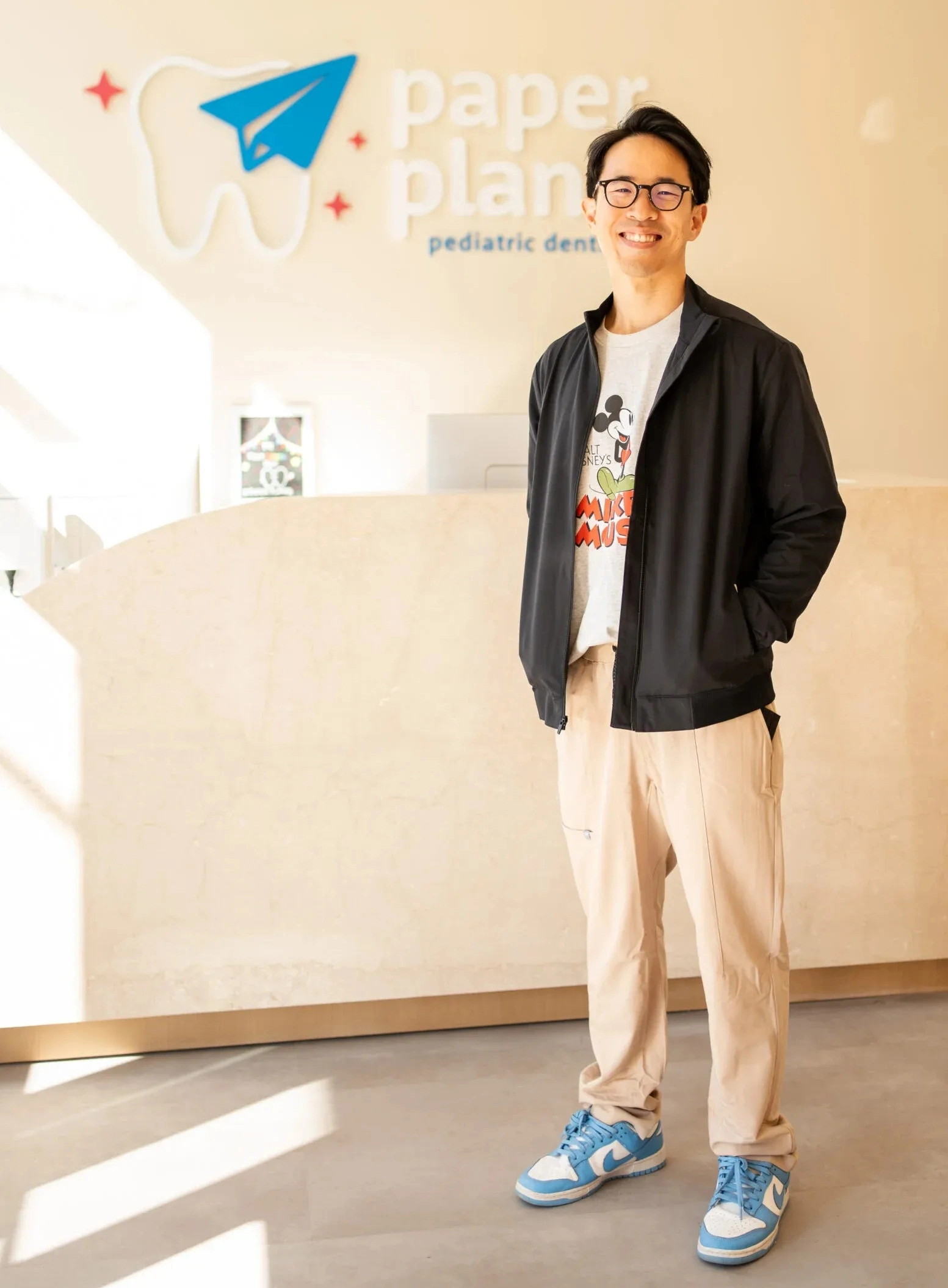
Dr. Christopher Pae is a board-certified pediatric dentist (ABPD) and member of the American Academy of Pediatric Dentistry with almost a decade of clinical experience. A graduate of Fordham University and Stony Brook School of Dental Medicine, he founded Paper Planes Pediatric Dentistry in Garden City, NY, where he combines modern technology with a connection-first approach to make every child's dental visit warm, encouraging, and fun.

Paper Planes Pediatric Dentistry © 2026. All rights reserved. | Developed by WeCapture Dental. | Privacy Policy – Terms & Conditions – Accessibility Statement
Privacy Policy – Terms & Conditions
– Accessibility Statement | Paper Planes Pediatric Dentistry © 2026. All rights reserved. | Developed by WeCapture Dental.